
REVIEW · AL ZUBARAH FORT & THE NORTH
Doha: Olafur Eliasson Exhibit, Zubara Fort & Al Jumail
North Qatar feels like another planet from Doha. This day trip stacks big contrasts, with Al Zubara Fort for history and Olafur Eliasson for mind-bending public art in the desert, plus a look at the quiet north. I love how the fort grounds everything in Middle Eastern history, and I love how Eliasson makes you slow down and notice the ground beneath your feet. One watch-out: the plan is compact, so you get short time blocks at each stop and you will walk at the installation.
My favorite practical part is the way the tour handles logistics, with a small group of 6 and hotel pickup from Doha. Guides I’ve heard about, like Nawaz and Mohammed, keep the driving calm and the timing smooth, even when the weather feels intense.
In This Review
- Key points before you go
- A 4-hour north Qatar sweep from Doha
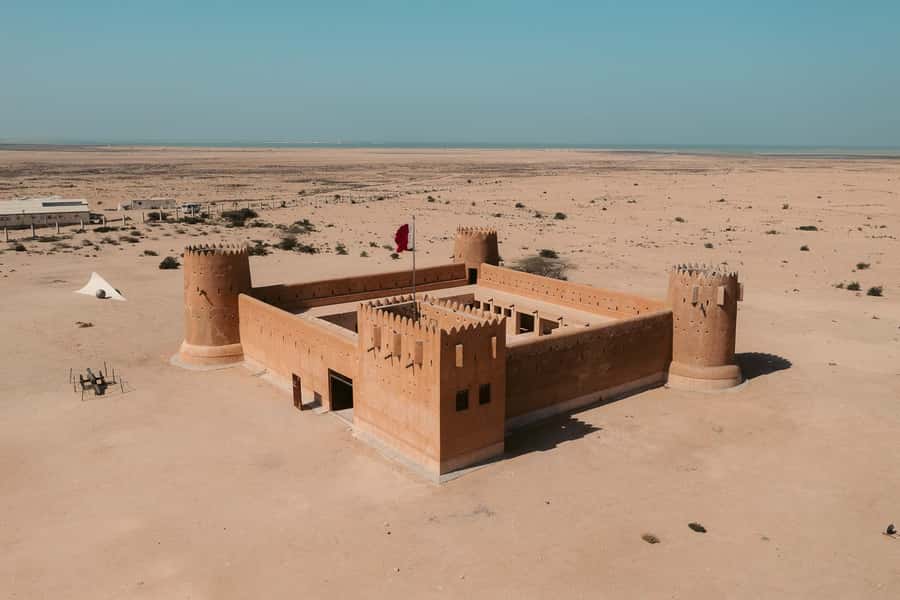
- Al Zubara Fort, UNESCO walls and military life in Qatar
- Olafur Eliasson desert art, Shadows Travelling on the Sea of the Day
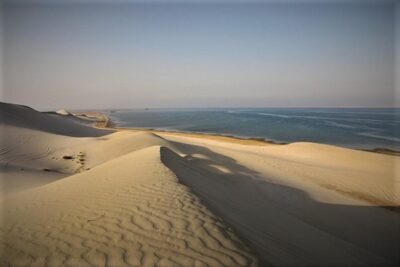
- Al-Jumail abandoned village, pearling and fishing in a fading town
- Madinat ash Shamal and the northern tip views
- Desert drive details, Ain Mohammed, dunes, and plant life
- Price and logistics, what $89 buys you
- What to wear and bring for a hot, walk-in-the-desert day
- Who this tour fits best
- Should you book this day trip to north Qatar?
- FAQ
- Where does the tour start in Doha?
- How long is the Doha to north Qatar day trip?
- What are the main stops during the tour?
- Are meals included in the price?
- Is this tour wheelchair accessible?
- How large is the group?
- What is the cancellation policy?
Key points before you go
- UNESCO Al Zubara Fort gives you real context for military life in Qatar in the 18th and 19th centuries
- Olafur Eliasson in the desert lets you interact with the work by looking up and realizing what it reflects
- Al-Jumail abandoned pearling and fishing village shows why people left for big cities in the 20th century
- Northern-tip photo stops at Madinat ash Shamal offer water views and sandy beaches
- Short, guided pacing works well for first-timers, but it also means limited time on-site
More runs north to Al Zubarah and the empty villages
- Full Day Tour to Qatar North And West With Pickup From Doha★ 4.9 · 371 reviews
- North Qatar Half-Day Tour: Al Zubarah, Purple Island & Mangroves★ 5.0 · 337 reviews
- From Doha: Day Trip to North And West Qatar With Pickup★ 4.9 · 336 reviews
- North Qatar Tour | Zubara Fort | Purple Island | Mangros Colony★ 5.0 · 323 reviews
A 4-hour north Qatar sweep from Doha
This is a straightforward day trip, built for people who want more than the usual Doha skyline. You start with pickup in Doha, then head north by SUV or jeep. In total, you get about four hours of guided time, which is just enough to cover three major stops, plus the long drive that makes north Qatar feel far away.
The value here is not only the destinations. It is the fact that you are not trying to figure out timing, driving, and where to stand for photos on your own. In small groups of up to six, the guide can keep an eye on the group without turning the day into a rushed conveyor belt.
You also get a live English-speaking guide, which matters on a day like this when you are moving through places that need context: a UNESCO fort, a contemporary art installation in sand, and an abandoned village where the story is in what is missing.
Al Zubara Fort, UNESCO walls and military life in Qatar
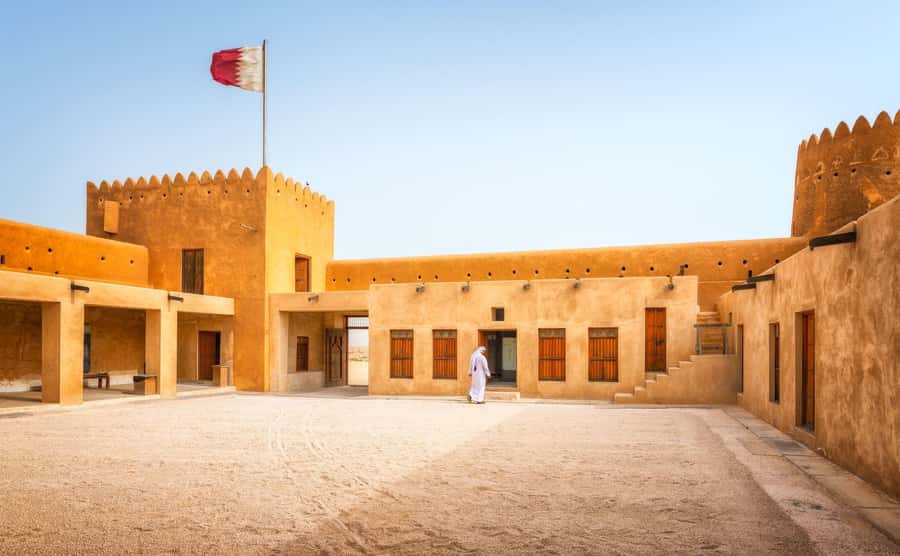
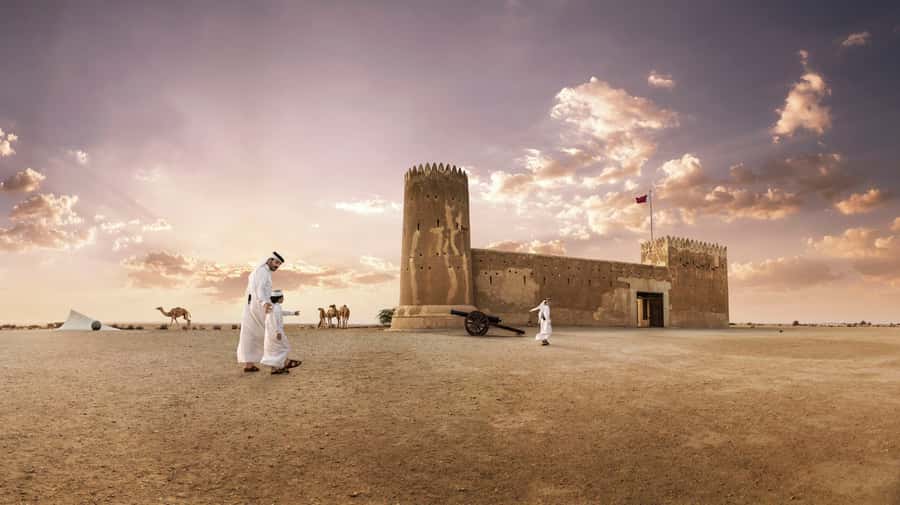
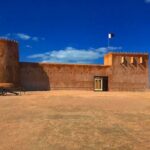
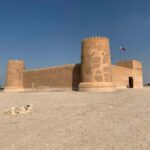
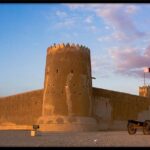
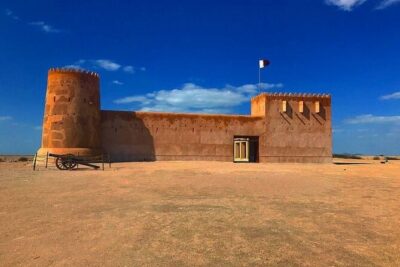
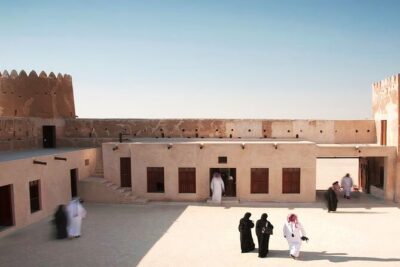
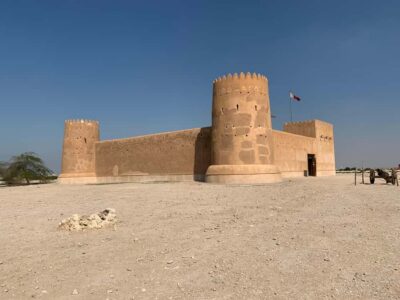
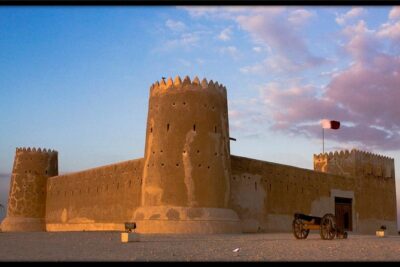
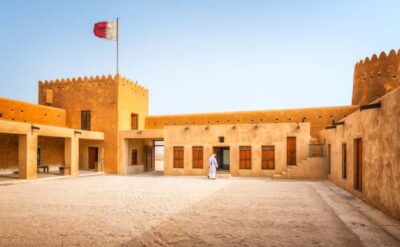
Al Zubara Fort sits within the Al Zubara Archaeological Site and is a UNESCO World Heritage stop for a reason. Even with a short visit time, you get a sense that this was not a random outpost. The fort connects to the 18th and 19th century story of Middle Eastern history in Qatar, including the military life that shaped how coastal areas were defended.
In a short photo stop plus a visit, you will want to do two things early. First, take a wide look to understand the fort’s shape and setting. Second, get one “close” perspective, so you have something to remember even if the day moves on fast.
A practical note: you are in an archaeological setting, so comfortable walking shoes help even if your total time on foot is limited. The benefit is that this stop gives your later stops meaning. When you see a desert settlement and a disappearing pearling town later, you will understand better why people clustered along the coast and why protection and movement mattered.
Olafur Eliasson desert art, Shadows Travelling on the Sea of the Day
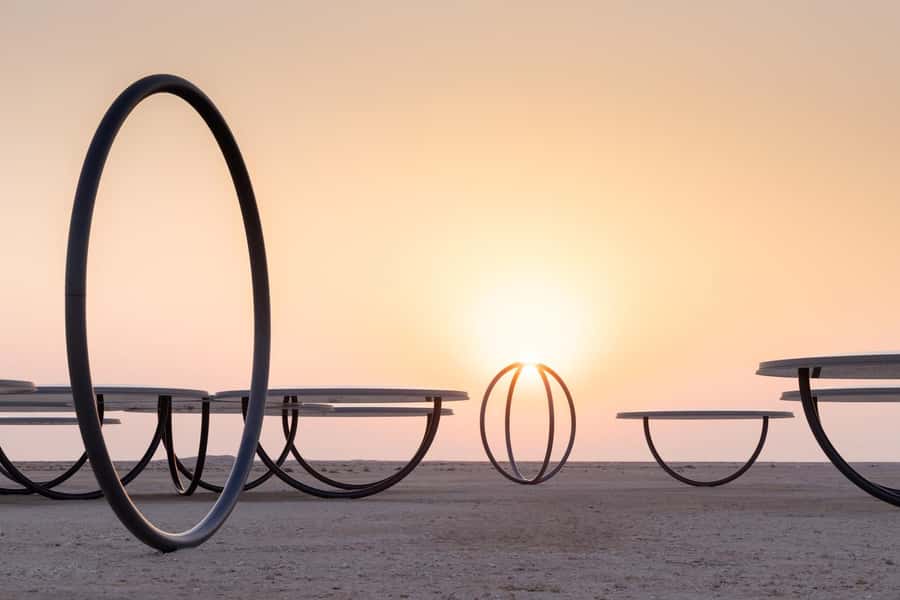
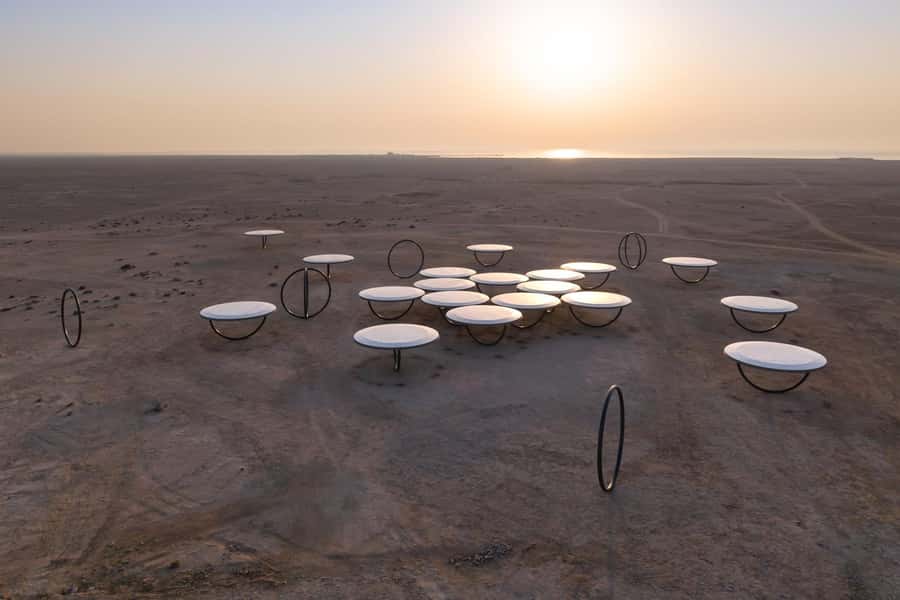
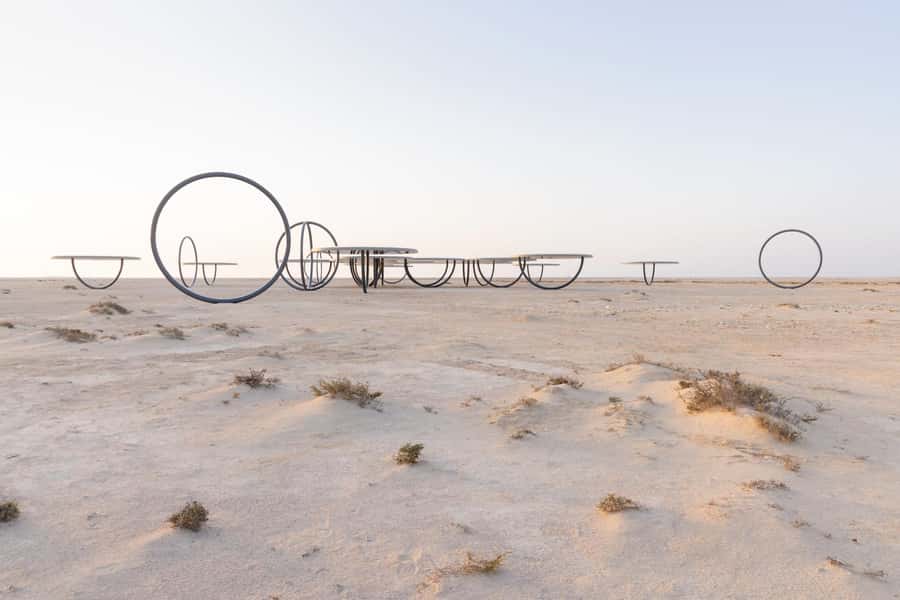
If you like modern art that asks you to pay attention instead of just looking for beauty, this is your highlight. Olafur Eliasson’s installation, Shadows Travelling on the Sea of the Day, is public art placed in the desert. The experience is designed so you connect with your surroundings, not just your camera roll.
What you should know before you arrive: the tour includes time to walk around and actually experience the installation. One important consideration is that you may need more time than you think to get the full effect, because the work is not one view. With only about 35 minutes on the schedule, you have to decide how you want to use that time.
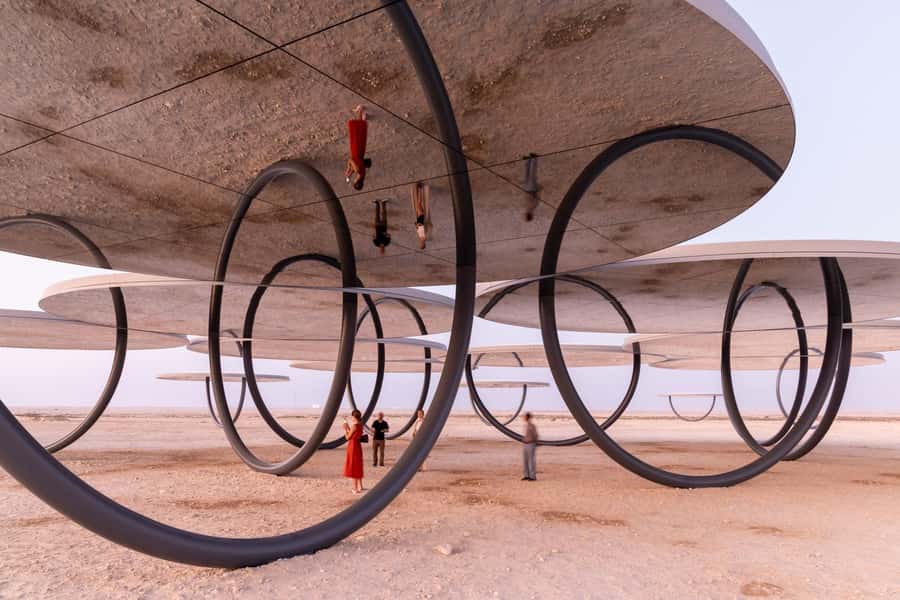
Here is what makes it special. The installation has large mirrors fitted into the ceilings. They reflect the sandy ground below. The artist’s idea is simple and clever: when you look up, you are also looking back down. So instead of thinking of it as ceiling art, treat it like a visual loop. I would plan your time by doing it in passes: first look up and notice the mirrored effect, then look down again and see how your position changes what you notice.
You will likely notice animal traces, desert plants, and rock formations around the work, with the desert stretching out for miles. That detail matters. The installation feels like it belongs to the ground because it is literally framed by it. Even if you are not an art expert, you can still “read” the mood by how light and reflection shift as you walk.



Al-Jumail abandoned village, pearling and fishing in a fading town
After the art, the day turns quieter. Al-Jumail is an abandoned pearling and fishing village, and it gives you a different kind of history lesson. This is where you can see the bones of everyday life, not just walls built for defense.
The tour visit is short, about 20 minutes on-site, plus time to stroll. That means you should focus on a few priorities rather than trying to photograph everything. Look for what remains of structures and pathways, then connect it to the story you get from your guide: people left for the big cities in the 20th century.
That “why” is the point. North Qatar is not just about dramatic desert views, it is about economic shifts. Pearling, fishing, and trade patterns shaped communities, and then modernization pulled people toward urban opportunities. Once you understand that arc, the abandoned feel hits harder in a good way, because it makes the ruins feel like a living turning point.
If you are the type who enjoys walking through old places and imagining daily routines, you will get a lot out of this stop even with limited time. If you want deeper historical interpretation, you might wish you had more hours here, but the day is built to balance three distinct experiences.
Madinat ash Shamal and the northern tip views
Next comes the sensory change you get from the far north. The tour includes a stop in Madinat ash Shamal, with time for scenic views and photos, about 15 minutes. This is where the day earns its name: you are heading to the northernmost area of Qatar, and the reward is a mix of sea views and sandy beach atmosphere.
This portion is not about a single ticketed attraction. It is about atmosphere and perspective. You see how close desert life can feel to the water, and you get that sense of open space that Doha usually hides behind buildings.
A good way to use this time is to treat it like a short scenic break. Step away from the road, find a vantage point, and take a few photos from different angles. Then pause. It is tempting to rush, but the north is where the day’s driving makes sense.
Desert drive details, Ain Mohammed, dunes, and plant life
Between the stops, you spend real time on the road, around 75 minutes each way for the main drive stretch. The desert scenery is not just background. The tour route is described with specific features, including passing Ain Mohammed village and the presence of desert plants and traces left by animals.
That matters because it turns a “transfer” into part of the experience. When you are stuck in a car for an hour, you usually want something to look at. Here you have reasons to look: dunes, rock formations, and signs that desert life existed long before you arrived.
It also helps explain why the guide matters. Safe driving in sand and on less busy roads is not something you want to treat casually. Guides like Nawaz and Mohammed are repeatedly praised for safe, comfortable driving. On a hot day, comfort also matters. One group noted that when outside temperatures hit over 40 degrees, the driver supported sightseeing, which hints at how the vehicle breaks and pacing can affect how enjoyable the day feels.
Price and logistics, what $89 buys you
At $89 per person for a roughly four-hour guided excursion, you are paying for three things: transportation from Doha, an English-speaking guide, and access to places that are far enough from the city that DIY can be annoying.
If you try to do this on your own, you will likely spend time figuring out timing and where to stop, and you may lose the context that makes the forts and ruins click. Here, the guide keeps the day coherent, and the small group format helps you avoid the feeling of being herded around.
The “payoff” is that you get a UNESCO site, a major contemporary public art installation, and an abandoned historic village, all in one day. That is a lot of variety for the time. The drawback is that you cannot expect a slow, deep visit at all three places. One rating noted that for a long trip, not everything gets shown. In plain terms: you get the highlights, not an all-day archaeology seminar.
No meals are included, so plan around it. If you like to snack, you may want to bring a simple plan for when you return to Doha. The good news is that the schedule is short enough that you can often pair it with a meal afterward without burning half your day.
What to wear and bring for a hot, walk-in-the-desert day
This is a practical list, and you should treat it as essential. Bring sunglasses, a sun hat, sunscreen, and comfortable clothes. Even if you are not planning to hike, you will be outside and exposed, especially around the art installation and the village walk.
Comfort clothes also matter because you will move between desert and fort settings. The day has several short legs: jeep time, short photo stops, and short walking windows. If you dress for sun and heat, you will feel better during the parts where you want to pause for photos or just stand and watch how reflections move.
Also remember that the installation involves walking to see it properly. Even if the walking time is not huge, it is enough that shoes and posture matter. A reviewer specifically flagged that walking is needed to see the installation, so I would plan for that in your pacing.
Who this tour fits best
This is a strong fit if you:
- Want a first taste of north Qatar without renting a car
- Like contrasts, history plus contemporary art plus abandoned places
- Appreciate a guided explanation, especially for UNESCO and historical sites
- Prefer small groups, with enough flexibility for photos and short breaks in the vehicle
It may be less perfect if you:
- Want long, unhurried time at only one stop
- Dislike walking for installations or outdoor sites
- Want meals included during the tour window
The short time at each stop is the trade-off. The day works because it is designed to hit the big notes and keep you moving while the light and mood are still good.
Should you book this day trip to north Qatar?
Book it if you want a tight, well-run overview of north Qatar with real variety. The combination of Al Zubara Fort, Olafur Eliasson’s Shadows Travelling on the Sea of the Day, and the abandoned Al-Jumail village gives you three different ways to understand the region: defense and settlement, contemporary art and perception, and economic change and disappearance.
Skip it or rethink it if you want long stops, deep museum-style interpretation, or meal support during the tour. Also reconsider if you do not want to walk at the art installation, because seeing it properly is part of the experience.
For most people, the decision comes down to value and logistics. When you add hotel pickup, transportation, and a live English guide, plus small-group attention, this tour feels like a smart way to spend a short stay in Doha and still see a side of Qatar that feels worlds away.
FAQ
Where does the tour start in Doha?
The tour includes hotel pickup and drop-off, and pickup can be at your hotel or location of choice in Doha.
How long is the Doha to north Qatar day trip?
The duration is 4 hours.
What are the main stops during the tour?
The itinerary includes Al Zubara Fort, Olafur Eliasson’s installation Shadows Travelling on the Sea of the Day, the abandoned Al-Jumail village, and a drive to the northern tip of Qatar with a stop in Madinat ash Shamal.
Are meals included in the price?
No. Meals are not included.
Is this tour wheelchair accessible?
Yes, the tour is wheelchair accessible.
How large is the group?
It is a small group, limited to 6 participants.
What is the cancellation policy?
You can cancel up to 24 hours in advance for a full refund.
Everything Else We Have Reviewed in Qatar
- Qatar Gold Dune Safari, Dune Bashing,Camel Ride,Sand Boarding,Inland Sea Desert
★ 5.0 · 2,807 reviews





Al Zubarah and the North, More Trips

Recently reviewed around Qatar
- Private Wakesurfing or Wakeboarding along Doha’s skyline
★ 5.0 · 3 reviews - Doha: West Coast Tour Sculpture,Camel Racing Track Rock Formation
★ 5.0 · 3 reviews - Sunset Keshta at Zekreet | Art, Adventure & Arabian Picnic
★ 5.0 · 3 reviews - Qatar West Coast Zkreet Richard Sierra Camel Track Rock Formation
★ 5.0 · 3 reviews - Private Tour to Zubara Fort Purple Island and Olafur Eliasson
★ 5.0 · 3 reviews
Al Zubarah Fort & the North, compared.
 ★ 4.9Full Day Tour to Qatar North And West With Pickup From DohaFrom $66371 reviews
 ★ 5.0North Qatar Half-Day Tour: Al Zubarah, Purple Island & MangrovesFrom $50337 reviews
 ★ 4.9From Doha: Day Trip to North And West Qatar With PickupFrom $71336 reviews
 ★ 5.0North Qatar Tour | Zubara Fort | Purple Island | Mangros ColonyFrom $77323 reviews
★ 5.0Full Day Tour to Qatar North And West With Pickup From DohaFrom $140288 reviews
★ 5.0North Qatar Tour | Zubara Fort | Purple Island | Mangros ColonyFrom $77323 reviews
★ 5.0Full Day Tour to Qatar North And West With Pickup From DohaFrom $140288 reviews
 ★ 4.9Doha North Qatar Tour Zubara Fort, Mangroves, Jumail VillageFrom $59267 reviews
 ★ 5.0Full Day Qatar’s North And West tour || History & HeritageFrom $165229 reviews
 ★ 5.0Full-Day Tour Qatar North And WestFrom $153160 reviews
Browse the lists this tour appears in